Research · Saint-Étienne, 2024
Mining Spoil and Living Ground — 2024
Enfanter le crassier (Raising the Spoil Heap)
Location
Saint-Étienne, Loire, France

The Concept
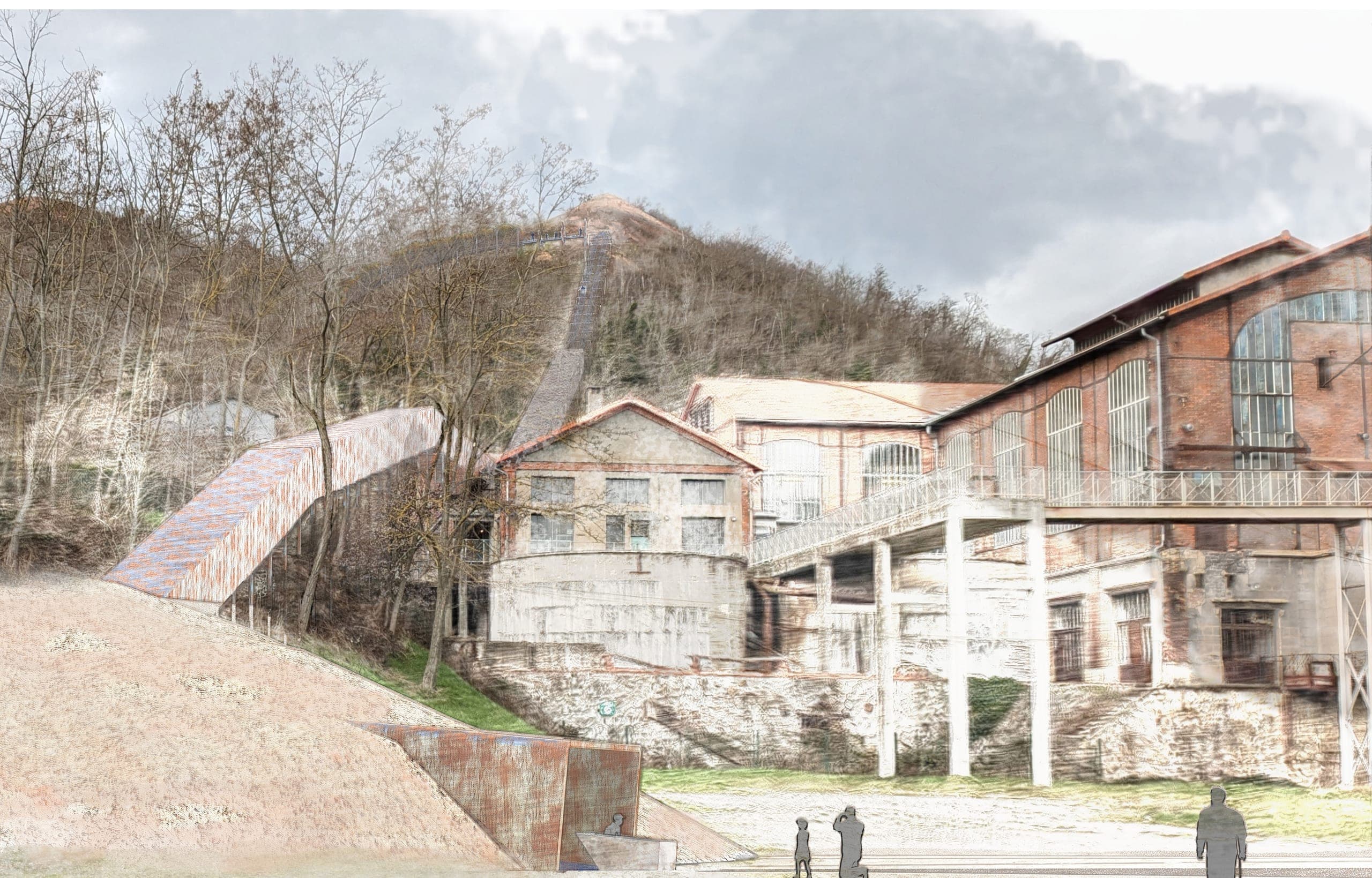
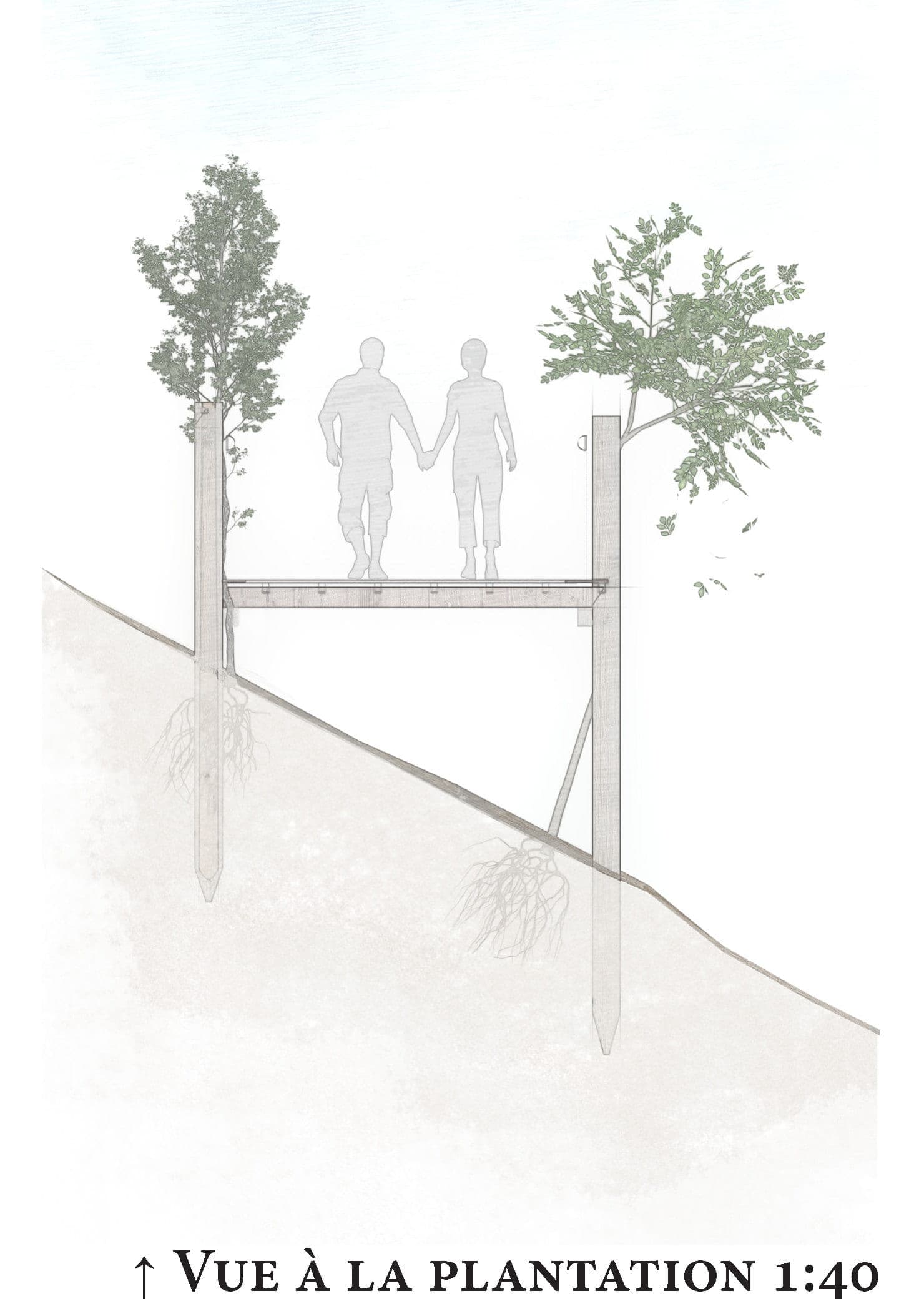
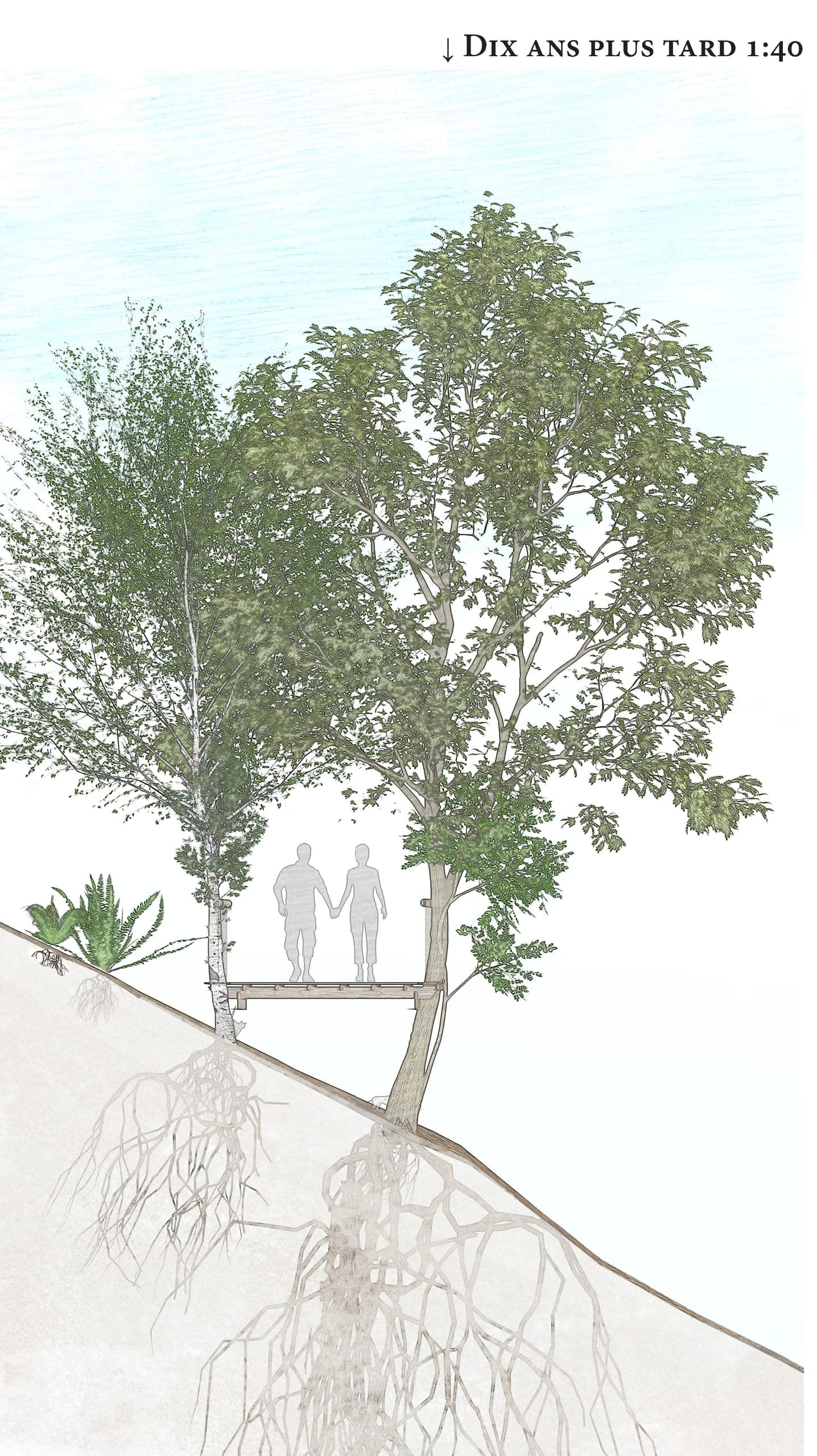
Through the 1940s and 1950s the waste rock from the Couriot pit rose more than fifteen metres a year. Locals call the heaps the “breasts of Saint-Étienne”. From the 1970s the mining company planted them to stabilise the slopes, then self-sown growth took over. The walk climbs them again: three sequences across the slopes of the Michon heaps, carried at first by acacia piles, with young trees at their feet. After ten years the piles would be pulled out and the decking moved onto the trunks, if they have grown strong enough. That is the project’s wager: handing its structure over to living wood.
What this project explores
- Design hypothesis: acacia piles removed after ten years, decking moved onto trees that have become load-bearing
- Three sequences from the gateway park to the headframe park: the Planted Path, the Stapled Gallery, the Skip
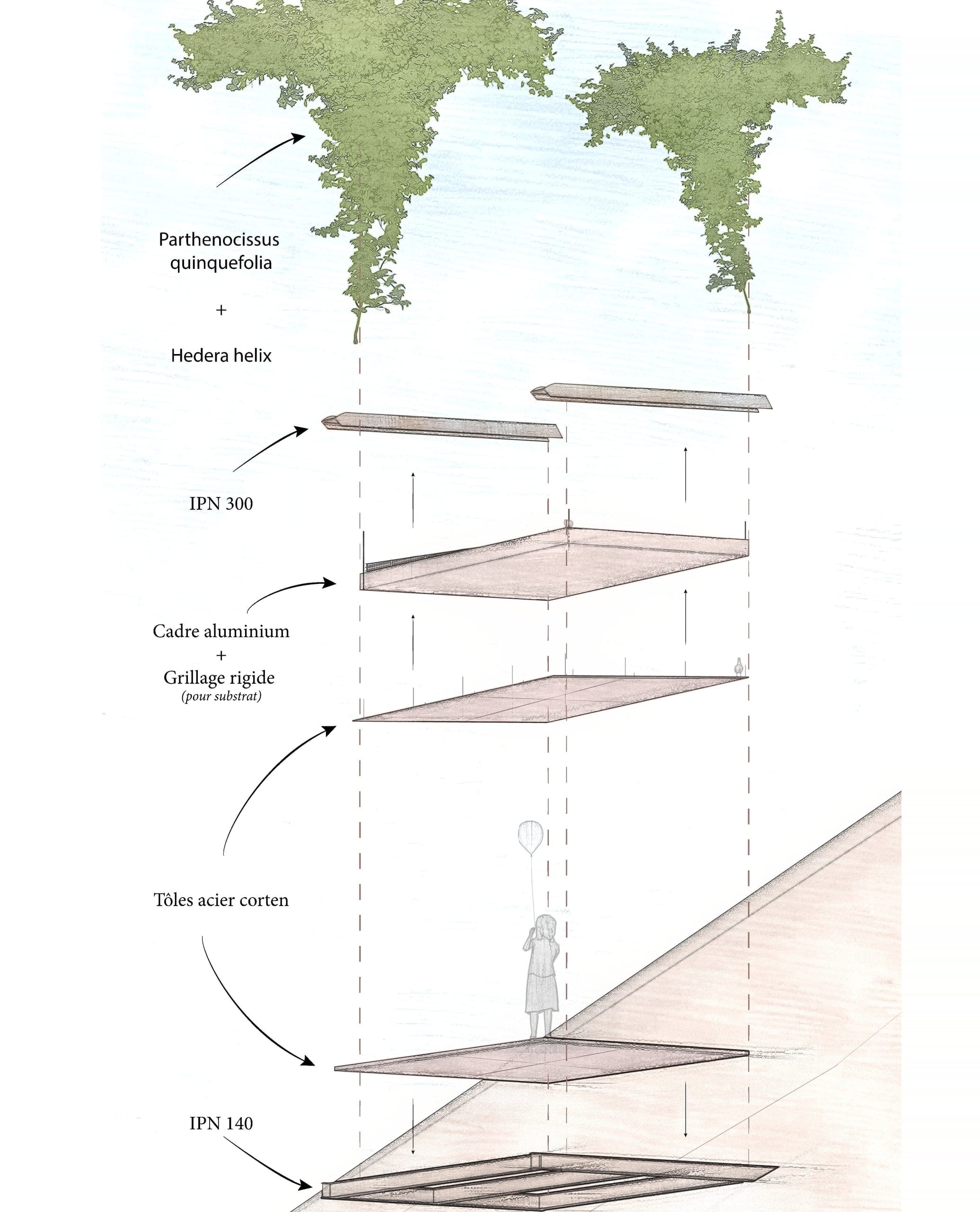
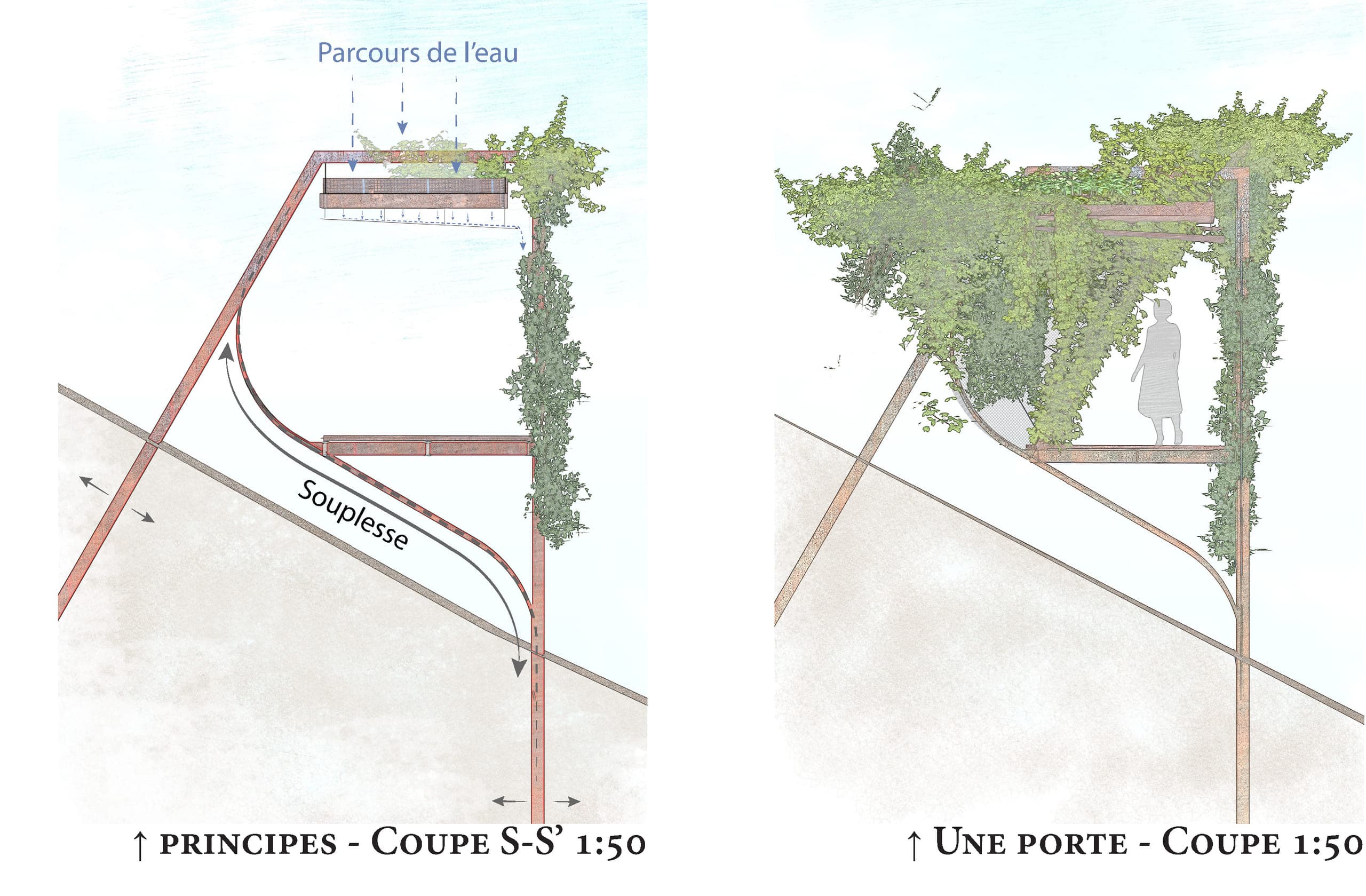
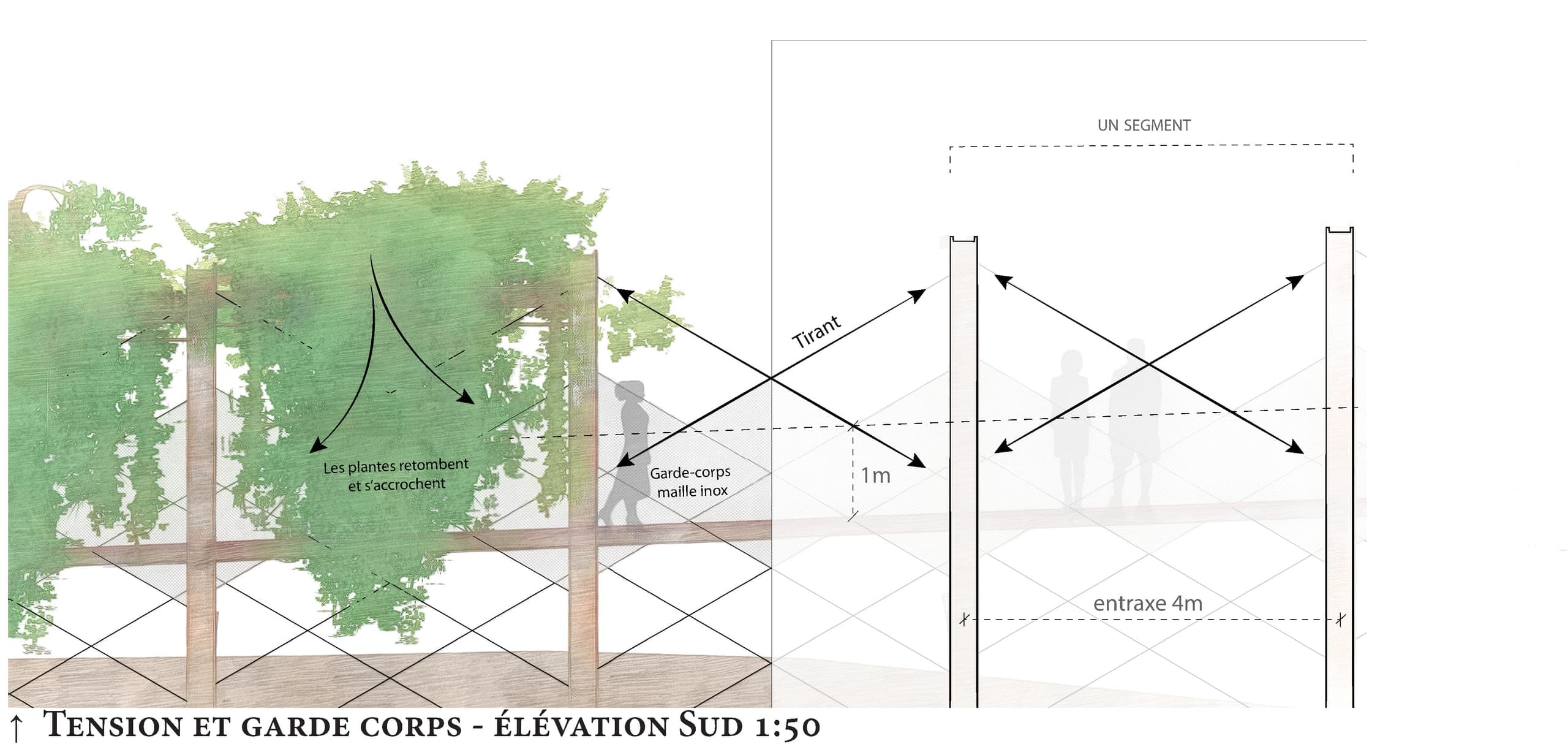
- Gallery in 300 and 140 steel I-beams, corten sheet, rigid mesh trays for the substrate, Parthenocissus quinquefolia and Hedera helix
Diploma project, École nationale supérieure d’architecture de Lyon, defended in 2024. Tutors: Gilles Desevedavy, Hervé Lequay, Yannick Hoffert.
"The spoil heap is modern man’s creature, brought into the world and then left behind; to give birth to something is also to look after it."
The research work
Four stages, from the ground to the canopy
01
The “breasts of Saint-Étienne”
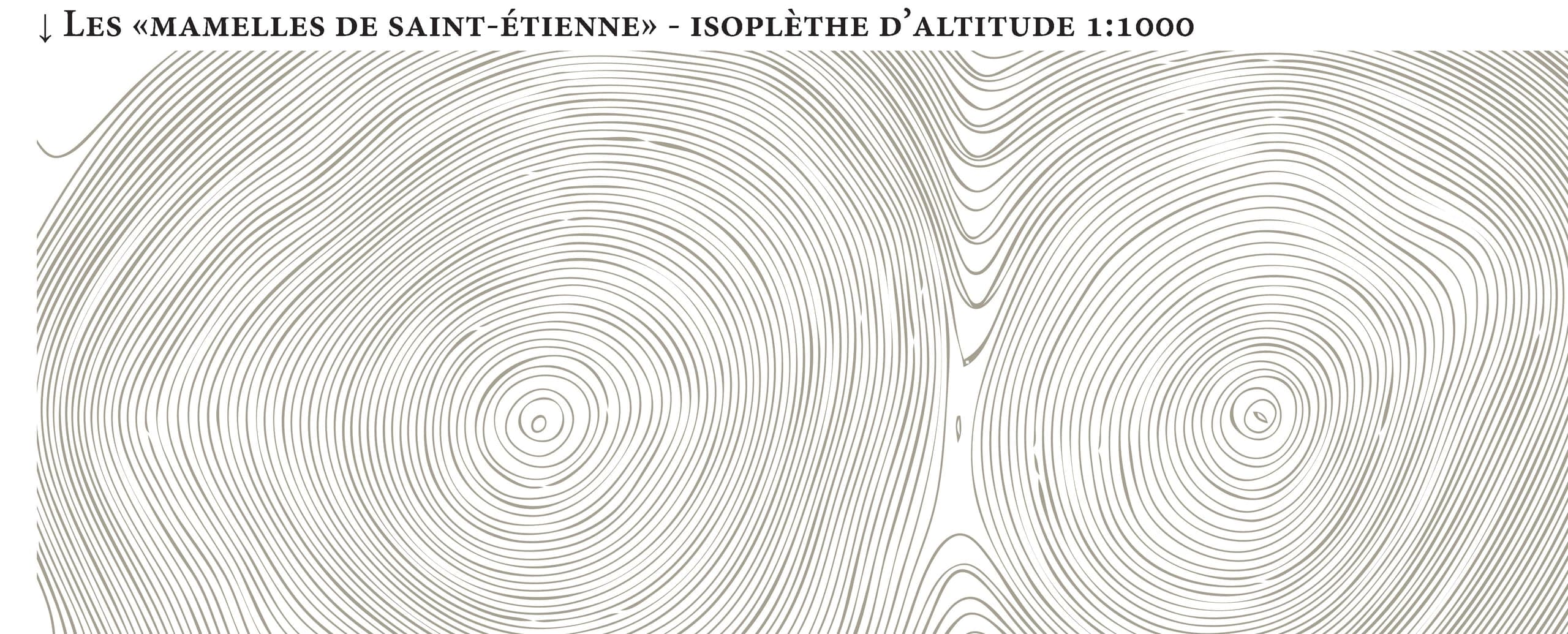
The Couriot pit closed in 1973. Before the mines were nationalised in 1946 it was the largest in the Saint-Étienne coalfield: over 700 metres deep, 1,500 miners, 900,000 tonnes of coal a year. Through the 1940s and 1950s the waste rock hauled up from below was piled into heaps that grew more than fifteen metres a year. From the 1970s the mining company planted them to stabilise the slopes; self-sown growth did the rest.
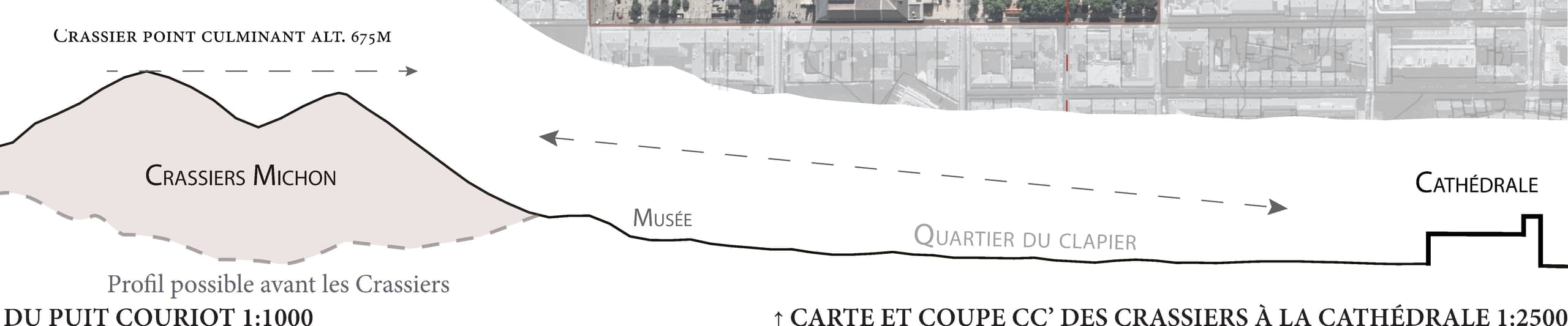
Local people christened them the “breasts of Saint-Étienne”. The highest point reaches 678 metres. From up there the heap faces the city: the eye runs all the way to Saint-Charles cathedral, the feet come back down through the Clapier district. At its foot, the Joseph-Sanguedolce park and the Mining Museum keep the memory of the pit.
02
From the gateway park to the headframe park
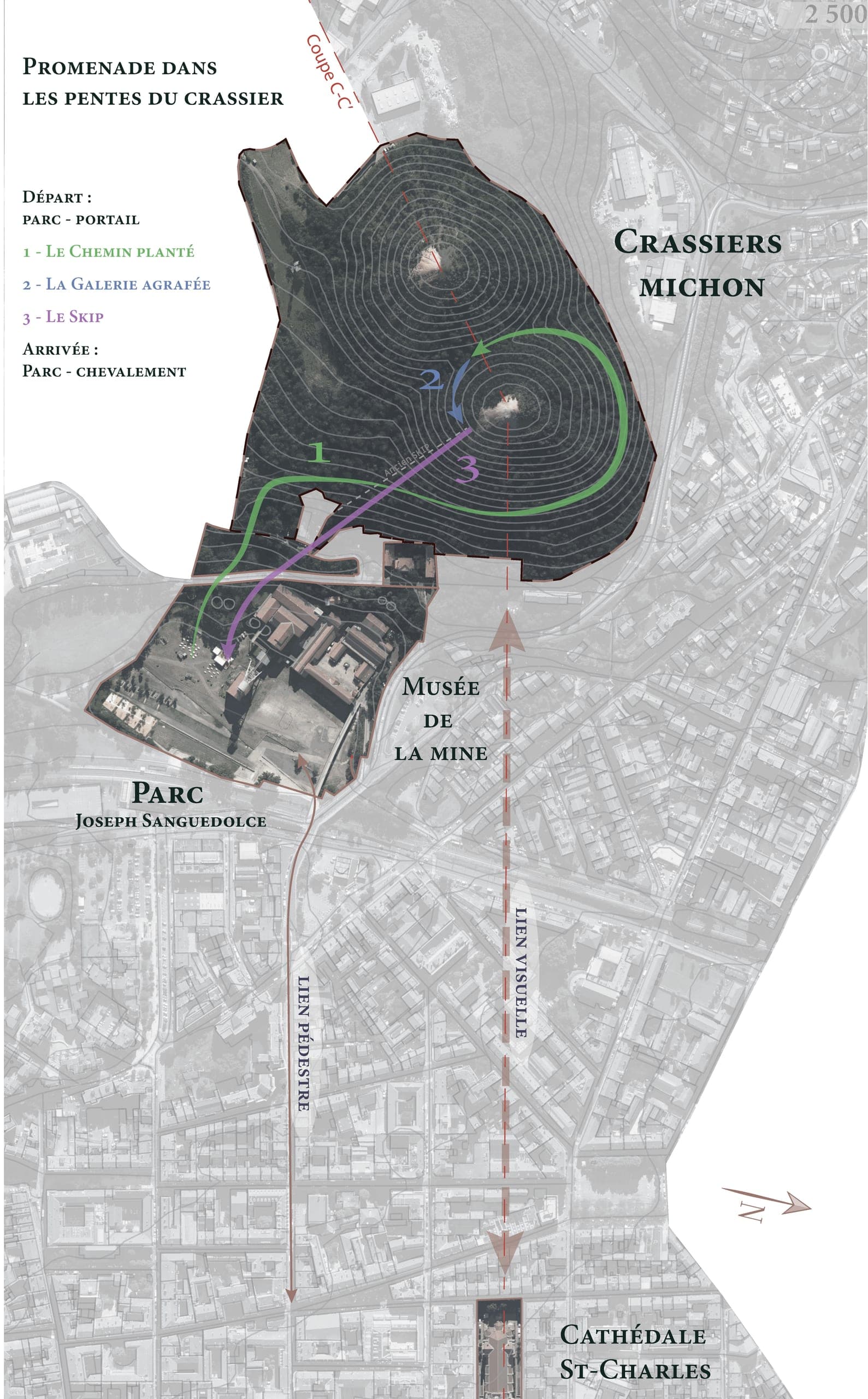
The walk starts at the gateway park, down below, and ends at the headframe park. Between the two, three sequences follow one another, each with its own way of holding the slope: first you walk on the ground, then above it, then you stop. The line follows the contours rather than fighting them, even if that makes it longer. Climbing a spoil heap takes time. Best to take it.
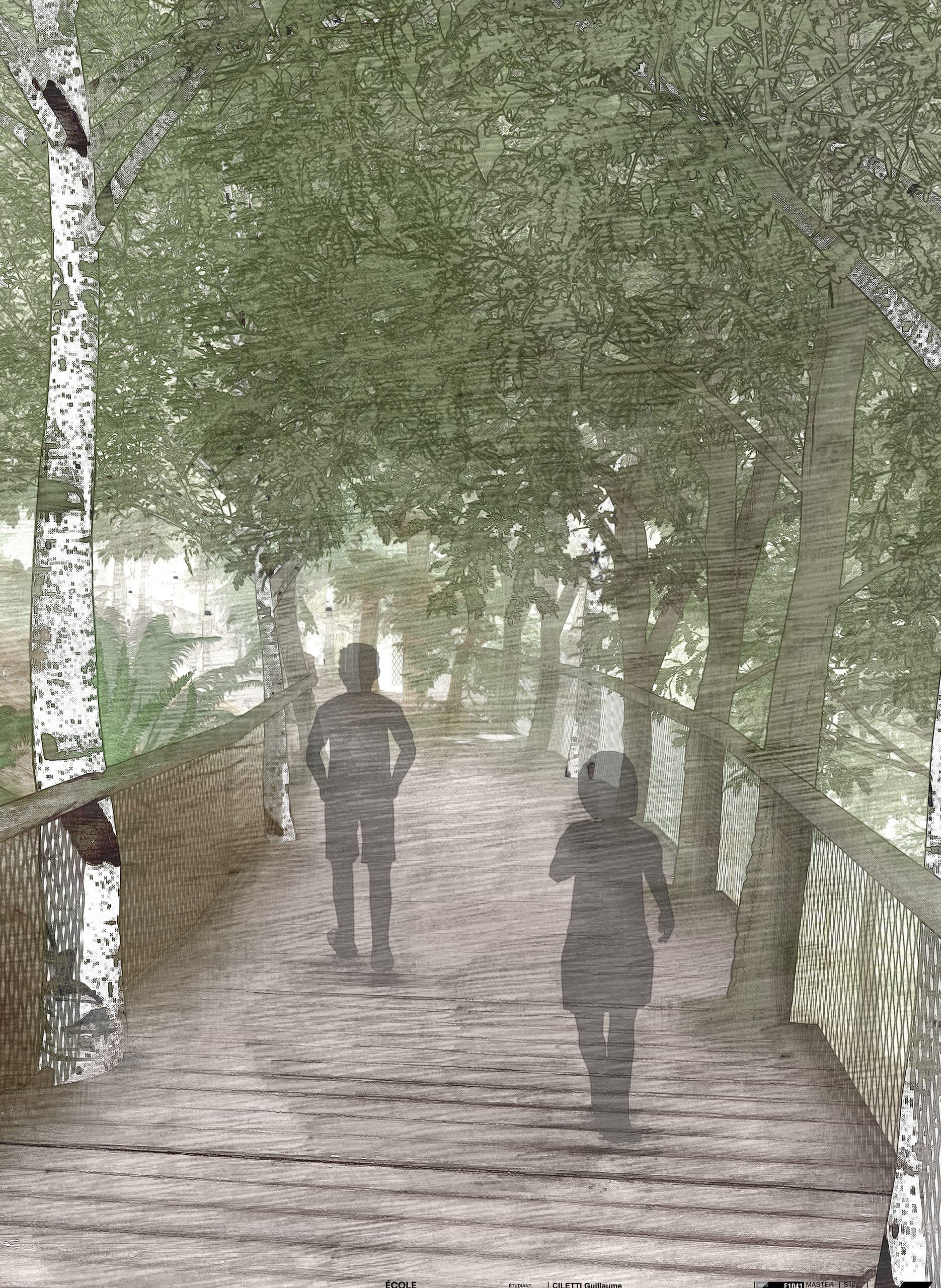
- 1The Planted Path: the climb on the ground, under trees that have grown here for decades, from the gateway park to the foot of the slope.
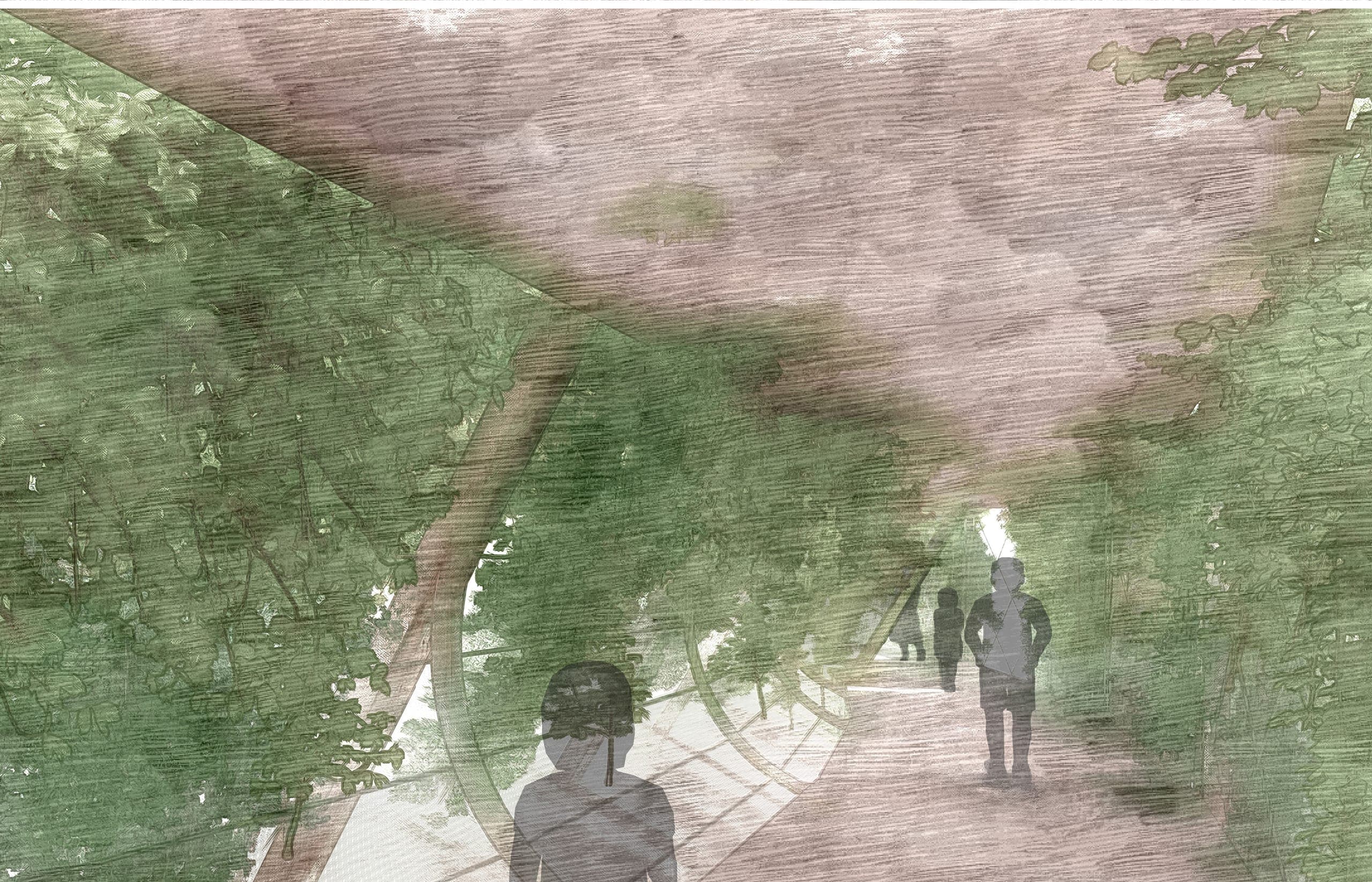
- 2The Stapled Gallery: a walkway carried by acacia piles, hugging a single contour line and opening up at intervals.
- 3The Skip: the ramp that once hauled the waste rock towards the summit, and that keeps the last word on the walk.
03
Five moments along the gallery
Five viewpoints punctuate the gallery. Each one decides what you see, and above all what you do not see yet.
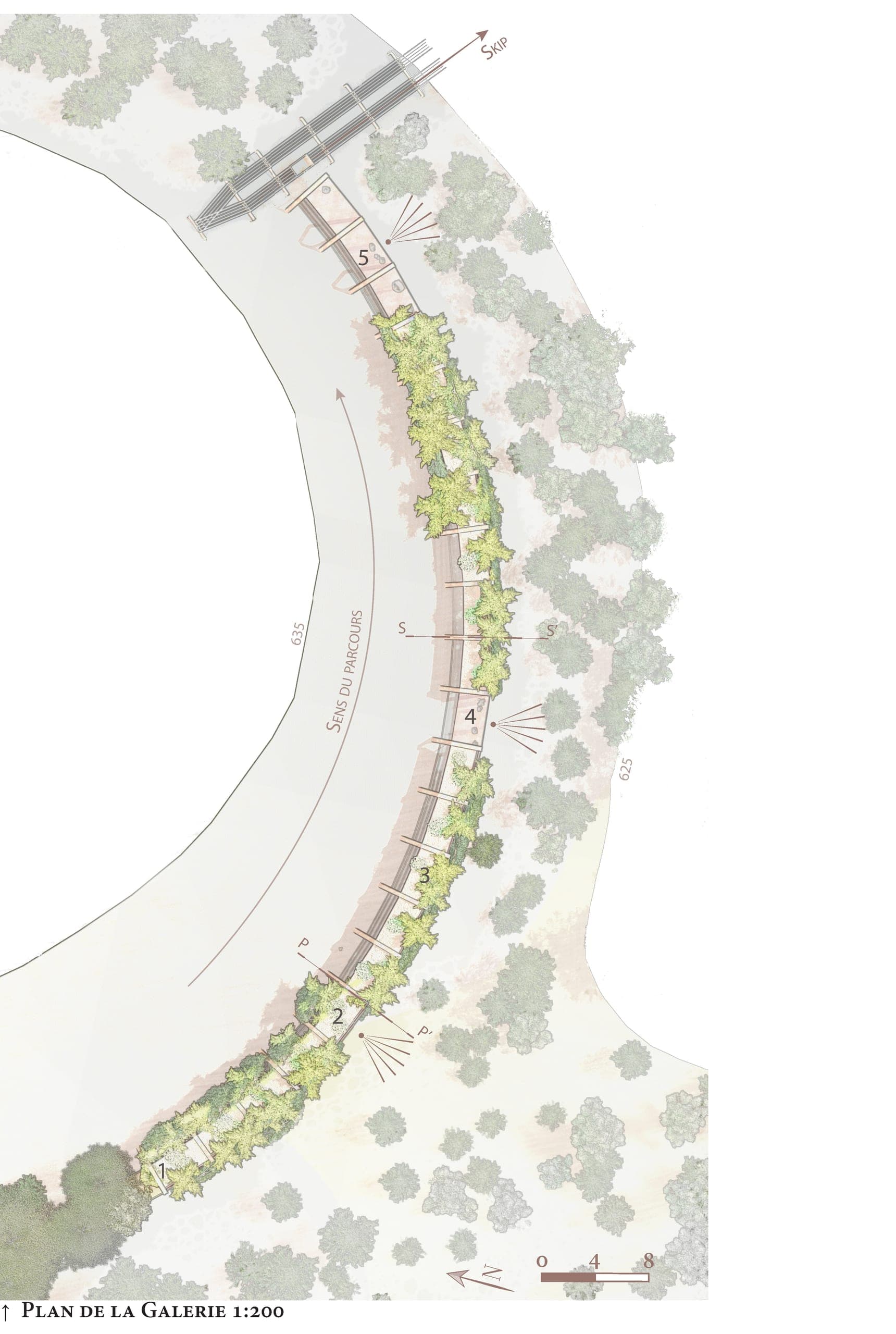
- 1
The Gate
Dense vegetation closes in and cuts off every view, for a while. The ear takes over: the life of the spoil heap and all its inhabitants, walkers for a day or residents for a season. And the wind, of course.
- 2
The Window
The view opens out on the landscape. The other spoil heap reappears close by; to the left, the Pilat massif begins to draw the horizon.
- 3
The Bowels of the Ground
The distance closes again and brings the eye back to the apex of the heap. A strange summit, a lunar landscape. The ground shows itself for what it is.
- 4
The Sky
The roof disappears for a moment, and the planting with it. There we stand, bare, between the sky, the mountain and the wider landscape. Nothing overhead.
- 5
The Plunge
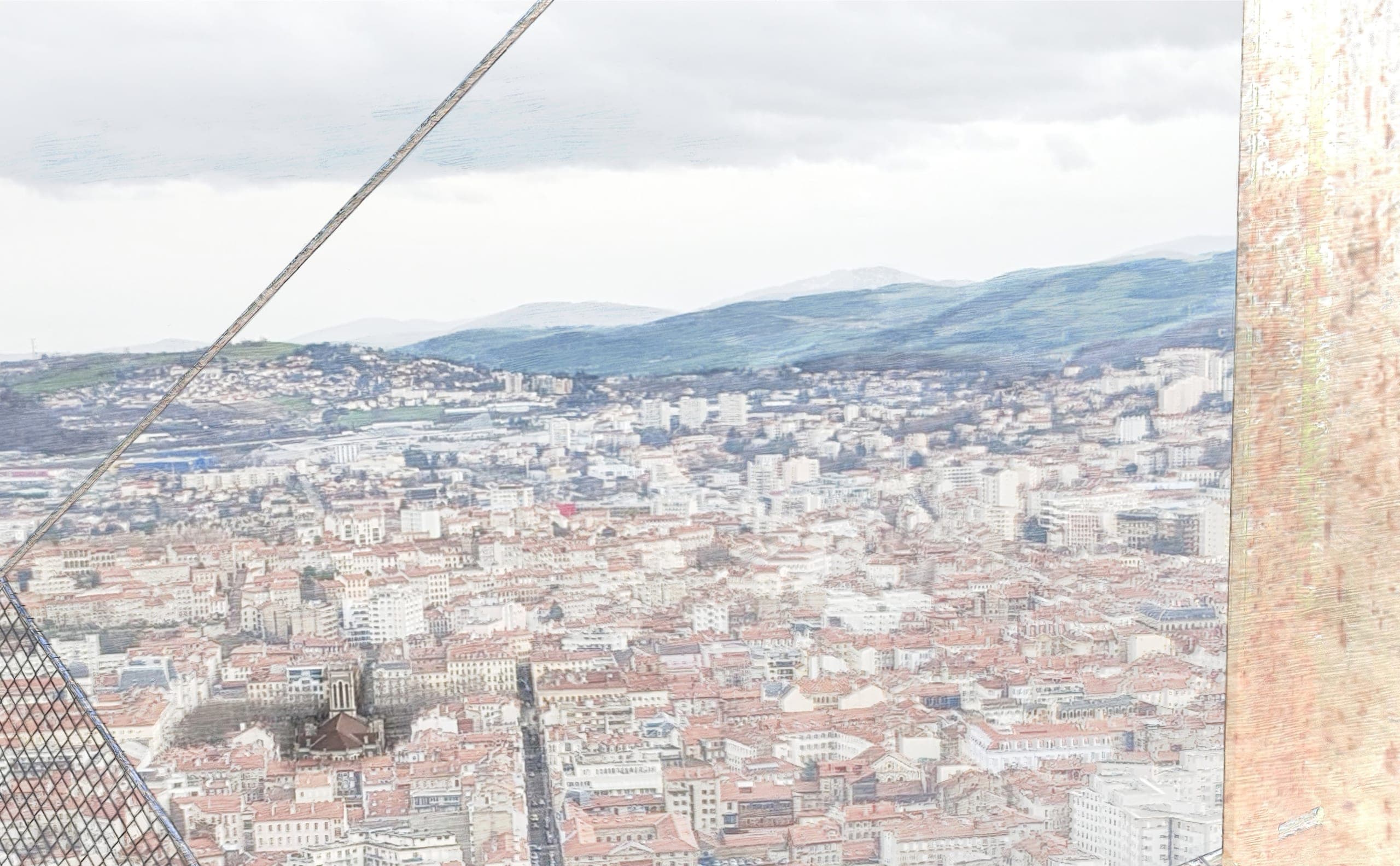
After the quiet of the heap returns, the city of Saint-Étienne arrives all at once. Face to face with the cathedral, roofs below, the town climbing back towards us.
Then the walk stops. Just like that. The climb is over, the summit will not be reached: here is the skip, and the only way is down.
04
If the trees take over
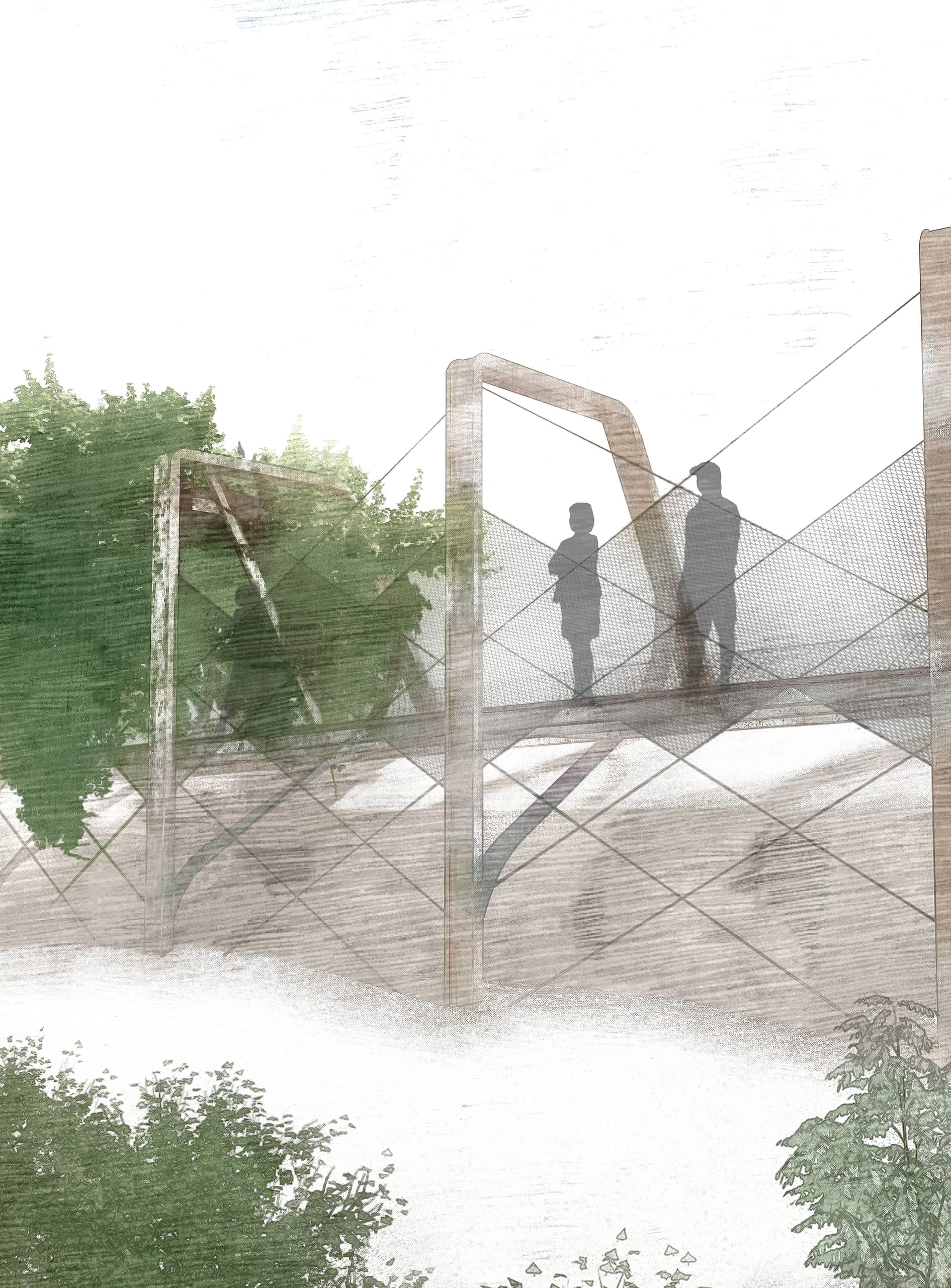
Acacia piles carry the platform. Young trees are planted at their feet and make the most of the opportunity to grow; they come from the trees that have populated the heap for half a century. The gallery itself holds on 300 and 140 steel I-beams, aluminium frames and rigid mesh to take the substrate, corten steel sheet. Parthenocissus quinquefolia and Hedera helix climb over it.
Ten years on, the project plans to pull out the piles and compost them on the spot, where they served. The decking would then be fixed to the trees, if their trunks allow: they would be the ones carrying the walk. That is the project’s wager, still to be tested. The structure would have been a crutch, long enough for living wood to take its place.
Next Project